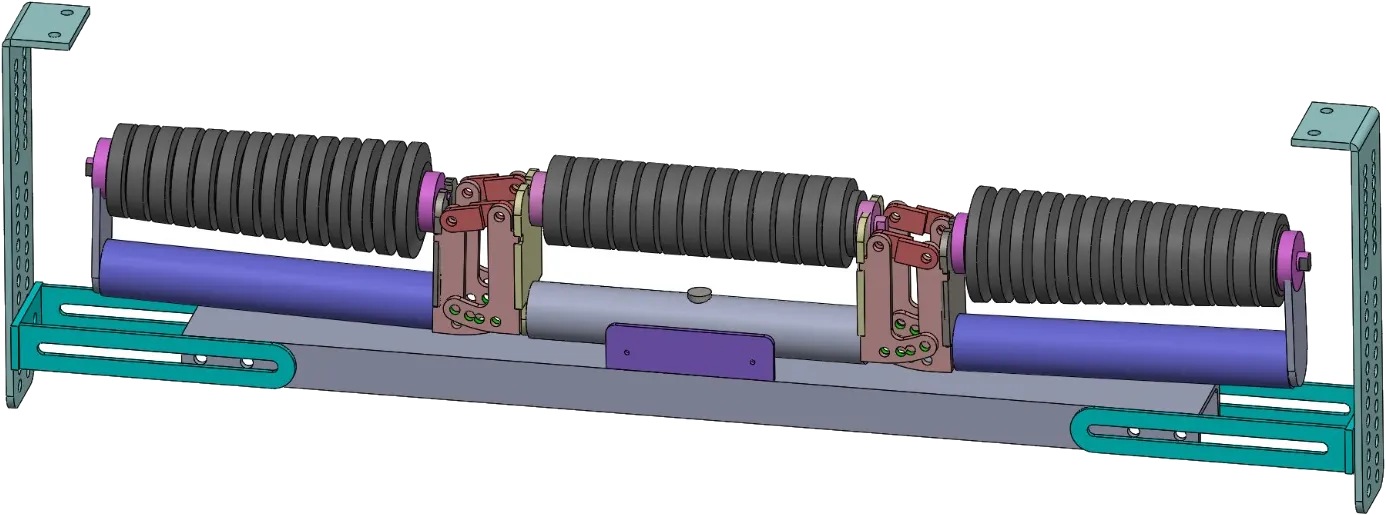
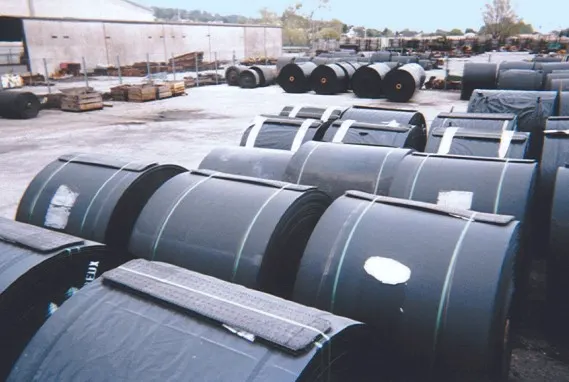
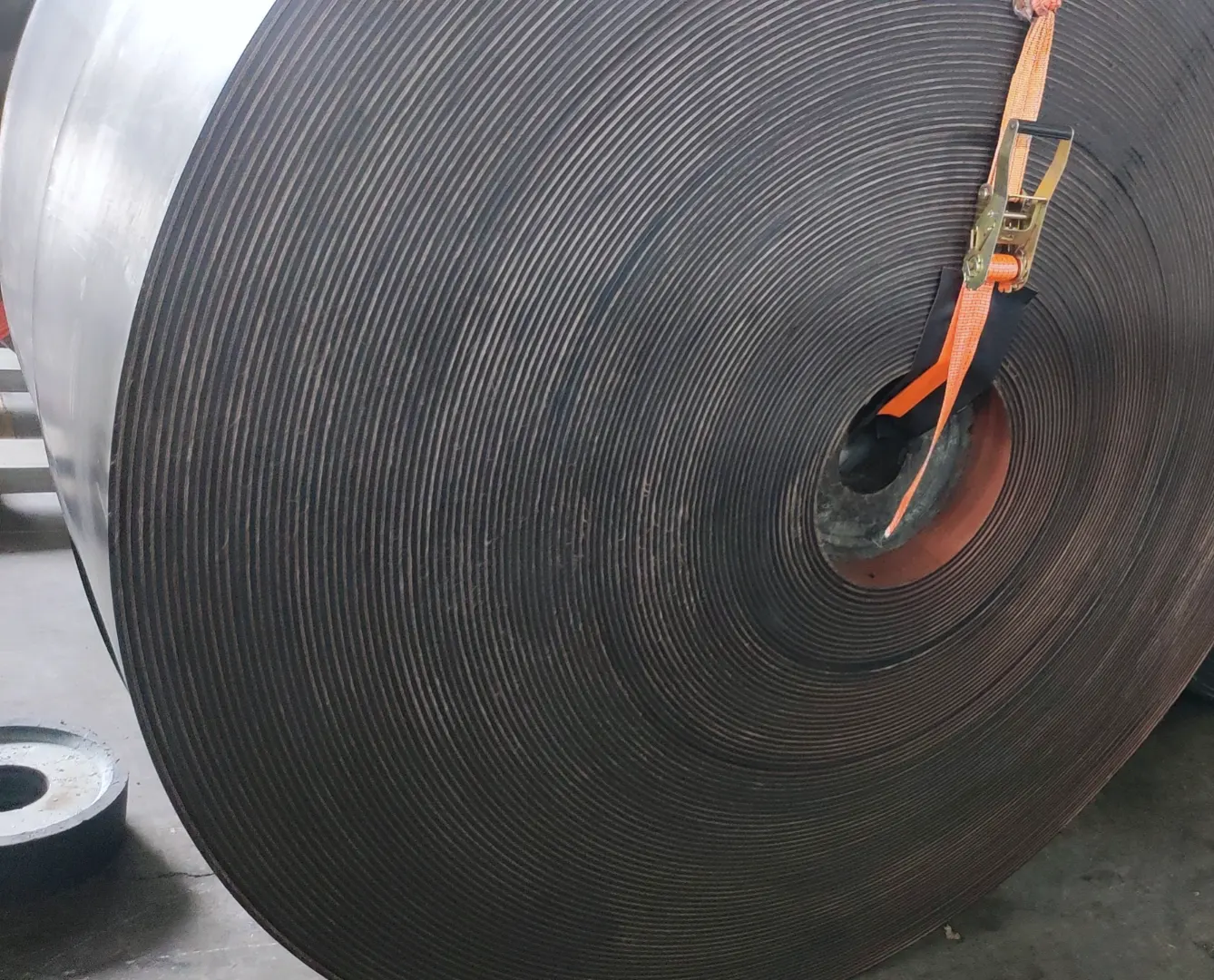
Schematic 3D view; not to scale.
EP conveyor belt
Polyester plies, rubber covers on both faces
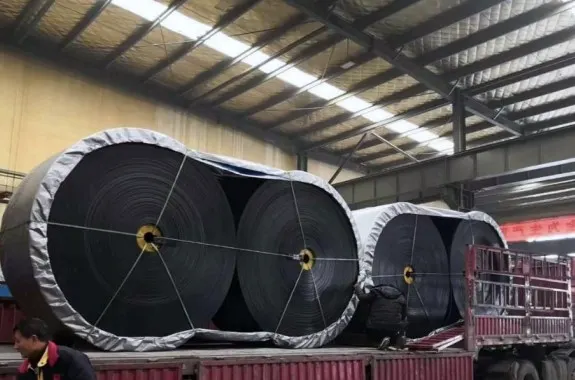
The EP conveyor belt is made of polyester plies with rubber covers on both faces. Its low elongation suits long-distance lines and humid conditions.
- High tensile strength and abrasion resistance
- Resistant to water, steam and chemicals
- Low elongation: the belt length changes little in operation
- Place on the line
- Carrying strand and belt
- Recommended for
- 14 industries (of 14)
- Datasheet
- Request with the short form
Overview
What is EP conveyor belt?
The EP conveyor belt is made by stacking polyester (EP) plies coated with rubber and plastic. The top and bottom faces of the belt are covered with rubber, which gives the belt its flexibility. The polyester carcass suits both light and heavy industry applications.
The EP conveyor belt offers high tensile strength and abrasion resistance. Its resistance to water, steam and chemicals, together with its impact resistance, keeps it stable in humid environments and where chemicals are present. Thanks to the low elongation of the polyester carcass, the length of the belt changes little in operation, which makes tensioning easier on long-distance lines.
The belt is suited to carrying small and medium-sized material. The EP conveyor belt runs stably on long-distance lines, under heavy loads and in environments exposed to chemicals, and needs little maintenance.
On the multi-ply textile conveyor belt, the carcass can be nylon (NN) or polyester (EP) and the belt is intended for short and medium distances; the EP conveyor belt has a polyester carcass and stands out on long-distance, humid lines.
Features
Key features
Polyester ply carcass
The carcass is made of polyester (EP) plies, giving the belt high tensile strength and abrasion resistance.
Water and chemical resistance
The belt resists water, steam and chemicals, so it runs stably on humid and chemically exposed lines.
Low elongation
The length of the belt changes little in operation, which makes tensioning easier on long-distance lines.
Stable under heavy load
The belt performs stably over long distances, under heavy loads and where chemicals are present.
Rubber on both faces
The rubber covers on the top and bottom faces give the belt its flexibility.
Benefits
- High tensile strength
- High abrasion resistance
- Resistant to water, steam and chemicals
- Impact resistance
- Low elongation: the belt length changes little in operation
- Good troughing
- Flexibility from the rubber covers
- Suited to light and heavy industry applications
- Stable over long conveying distances
- Low maintenance requirement
- Reliable conveying in humid conditions
Applications
Long-distance conveying
The EP conveyor belt runs stably on long-distance lines and needs little maintenance.
Humid conditions
The belt's resistance to water and steam gives reliable conveying in humid conditions.
Heavy loads and chemical exposure
The EP conveyor belt performs stably under heavy loads and in environments exposed to chemicals.
Small and medium-sized material
The belt is suited to carrying small and medium-sized material.
Recommended for
Used together with
Technical information
- Ply material
- Polyester (EP) plies
- Covers
- Rubber on top and bottom faces
- Resistance
- Water, steam and chemicals
- Conveyed material
- Small and medium-sized
- Conveying distance
- Suited to long-distance lines
- Field of use
- Light and heavy industry
Place on the line
Carrying strand and belt
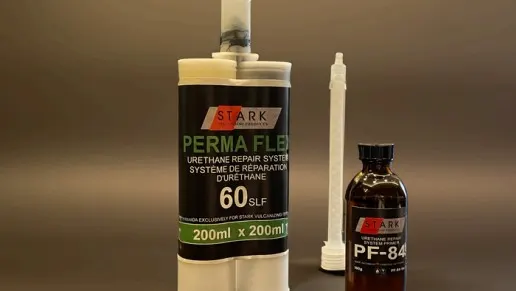
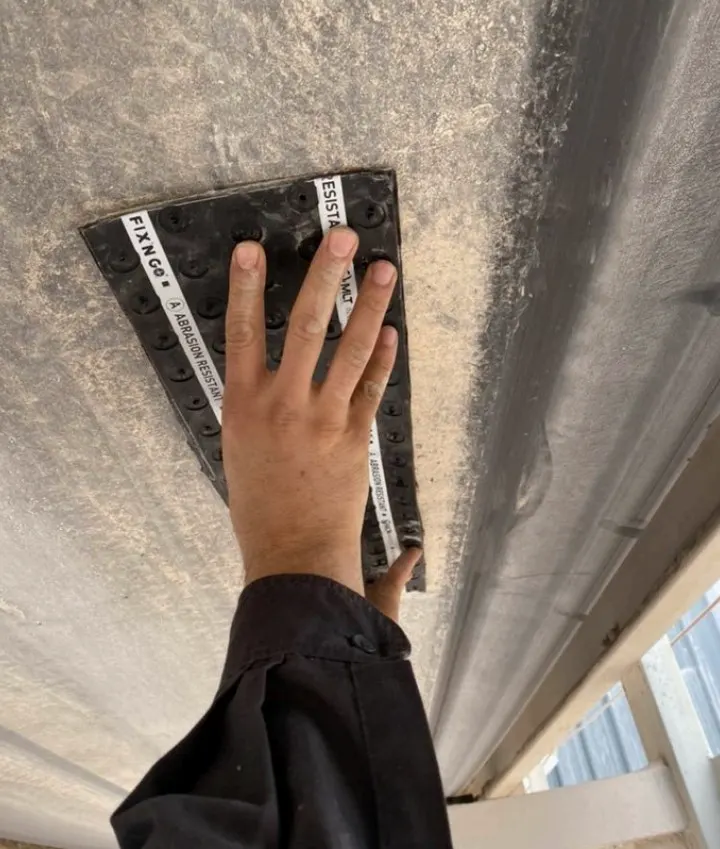
The belt wears, tears or gets punctured over time; choosing the right belt and repairing it in time shortens downtime.
Supporting services
Frequently asked questions
For questions specific to your line, you can contact our technical team.
What is EP conveyor belt?
How is the EP conveyor belt made?
Can the EP conveyor belt be used in humid conditions?
What material is the EP conveyor belt suited to?
What does the low elongation of EP belt provide?
Where on a conveyor line is EP conveyor belt used?
Which industries is EP conveyor belt used in?
What are the benefits of EP conveyor belt?
- High tensile strength
- High abrasion resistance
- Resistant to water, steam and chemicals
- Impact resistance
- Low elongation: the belt length changes little in operation
- Good troughing
Related articles
Related products
-
-
-