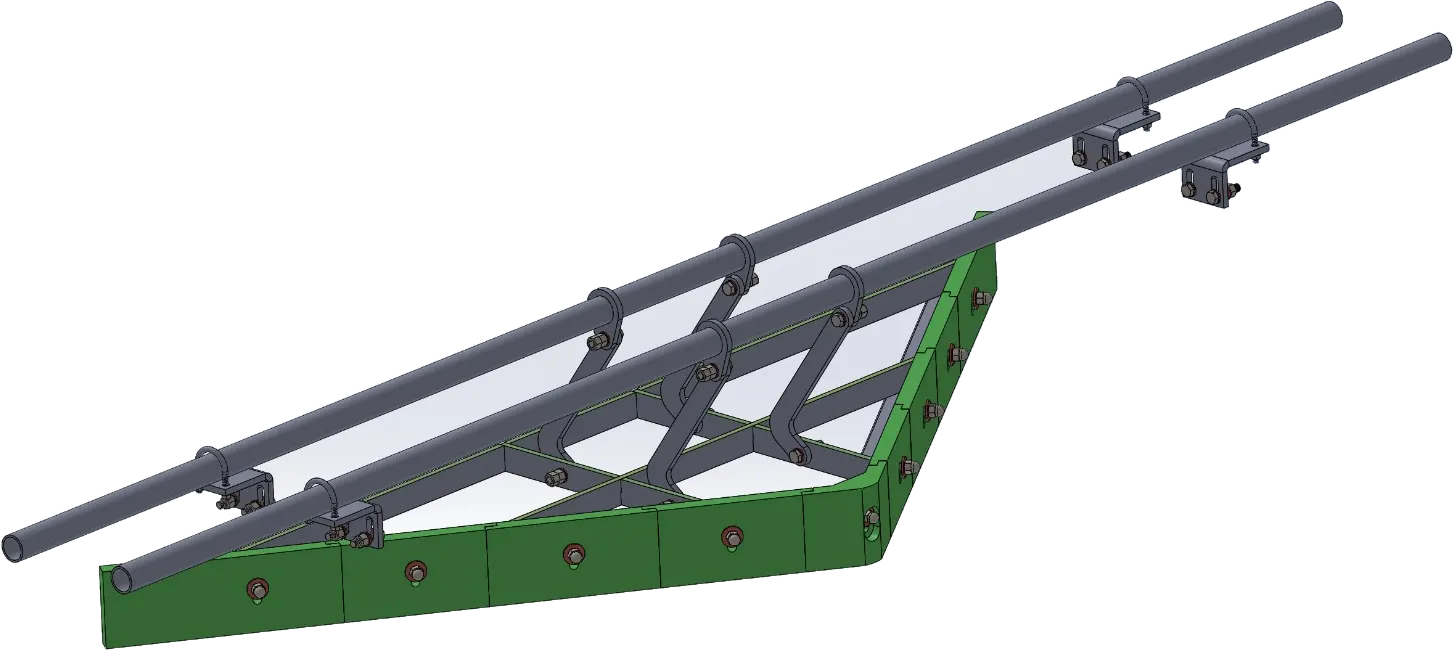
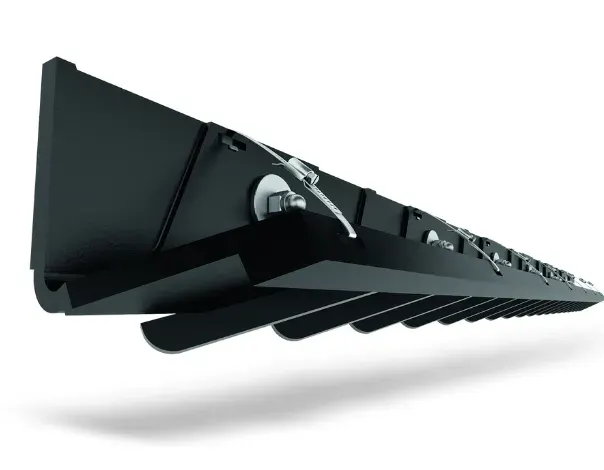
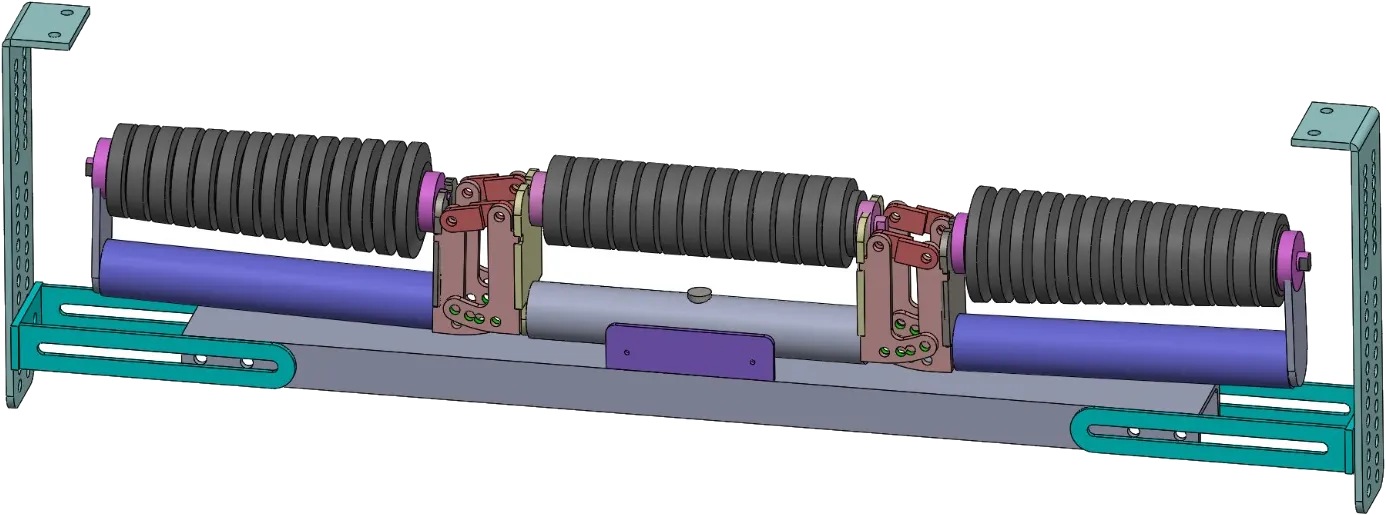

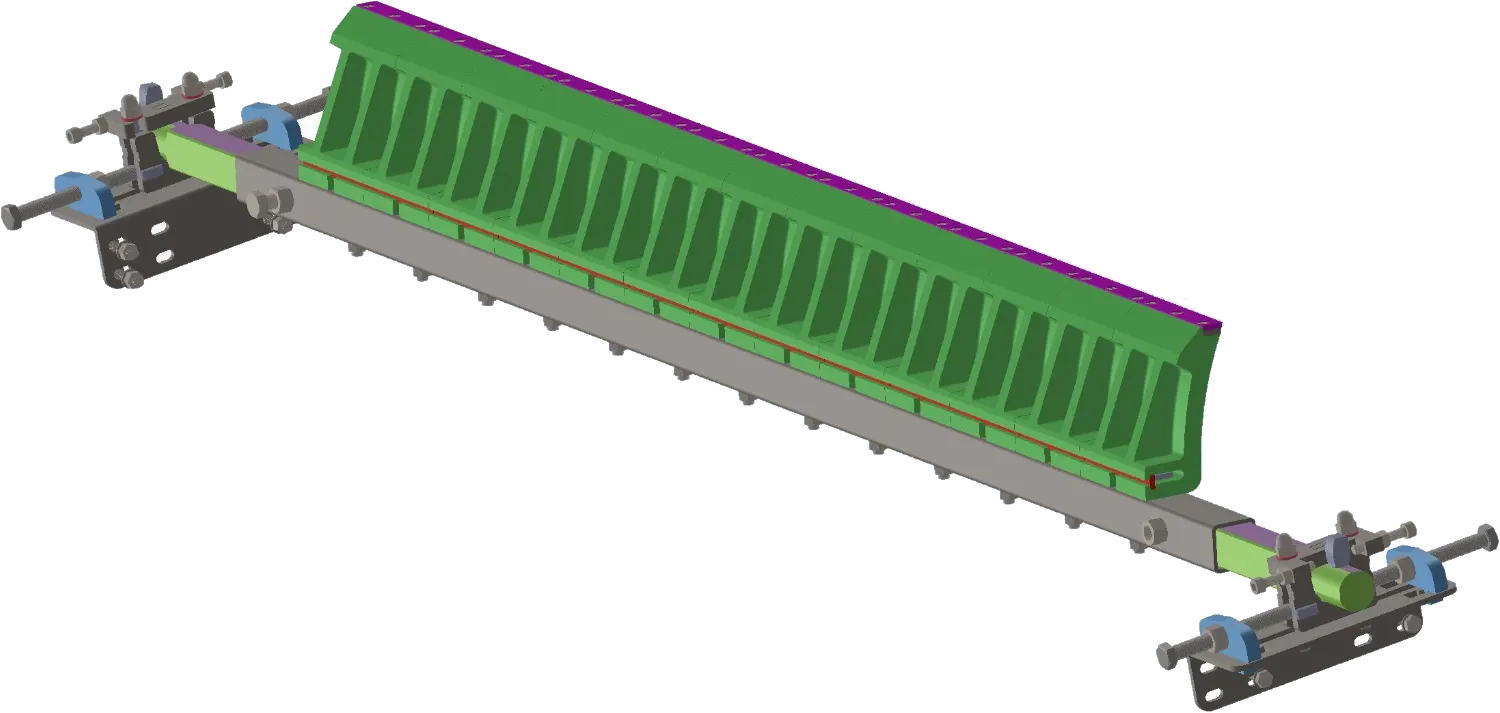
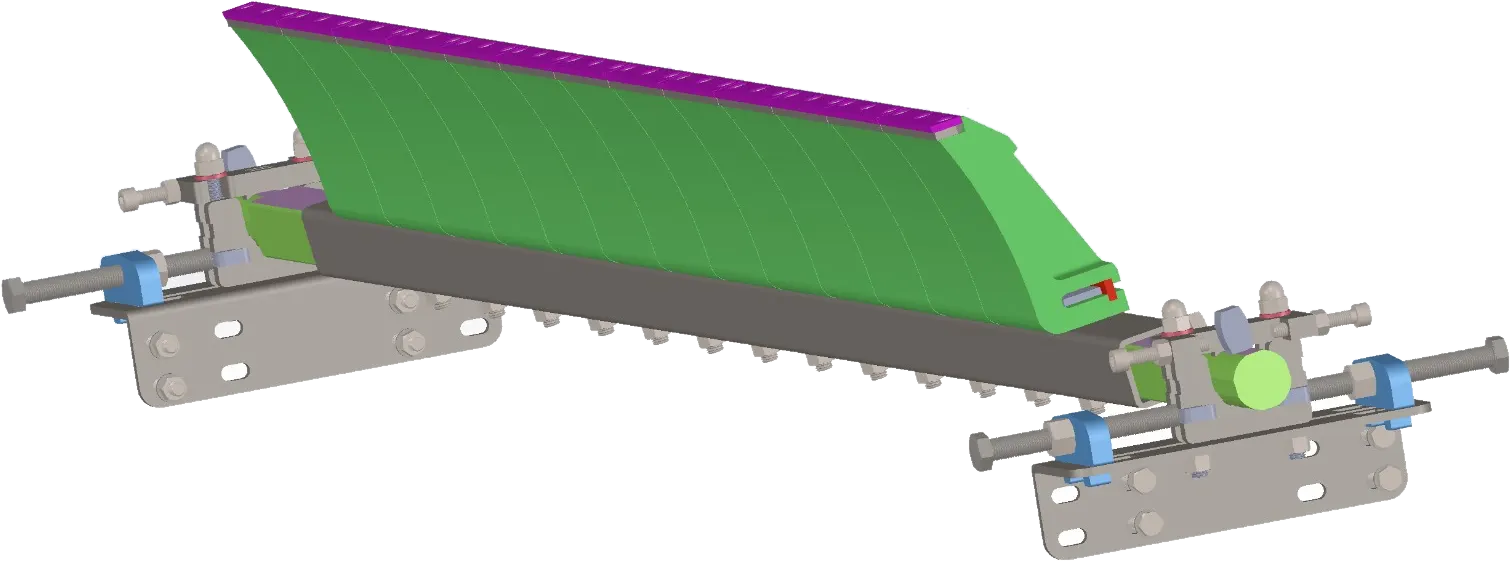
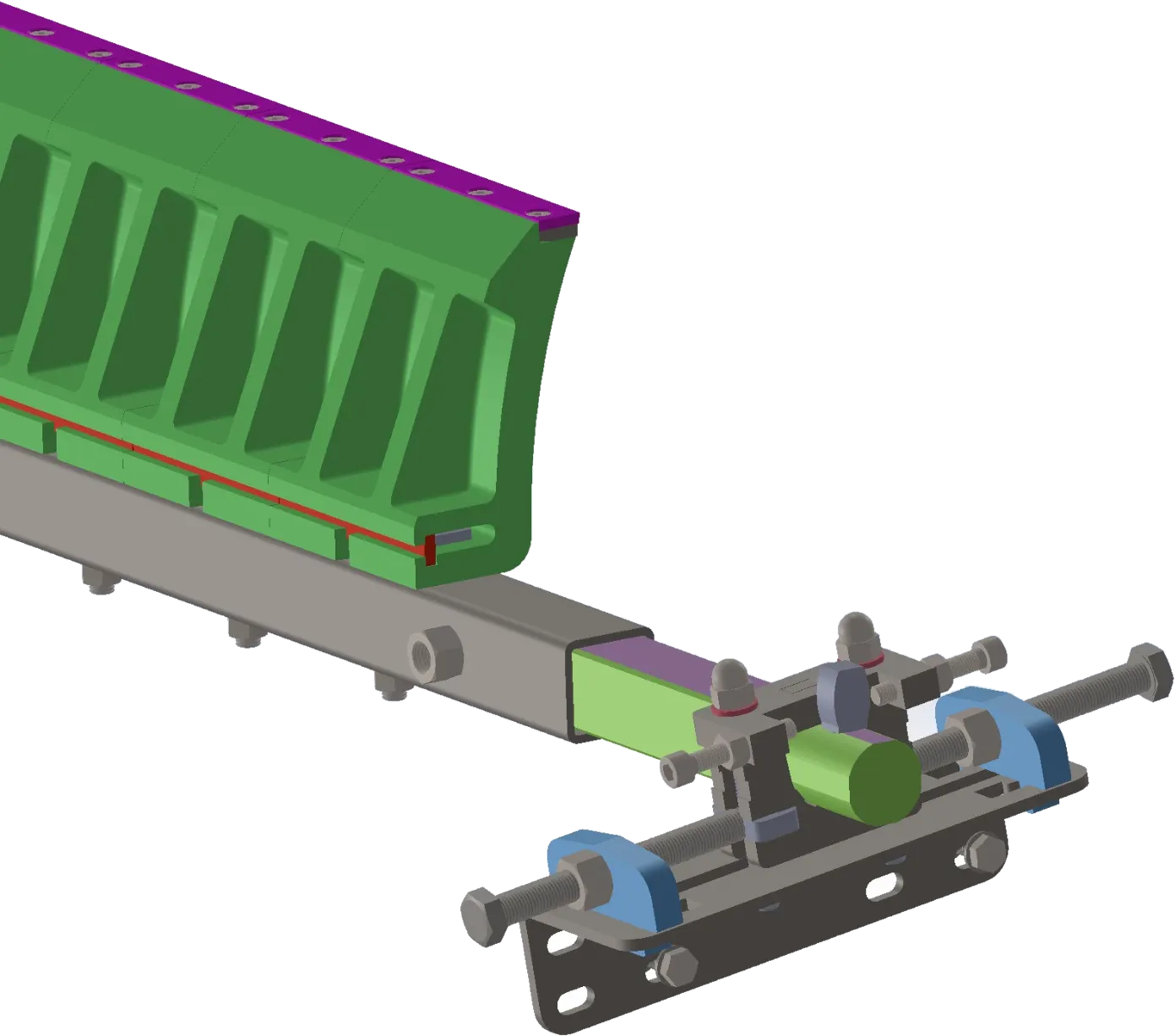
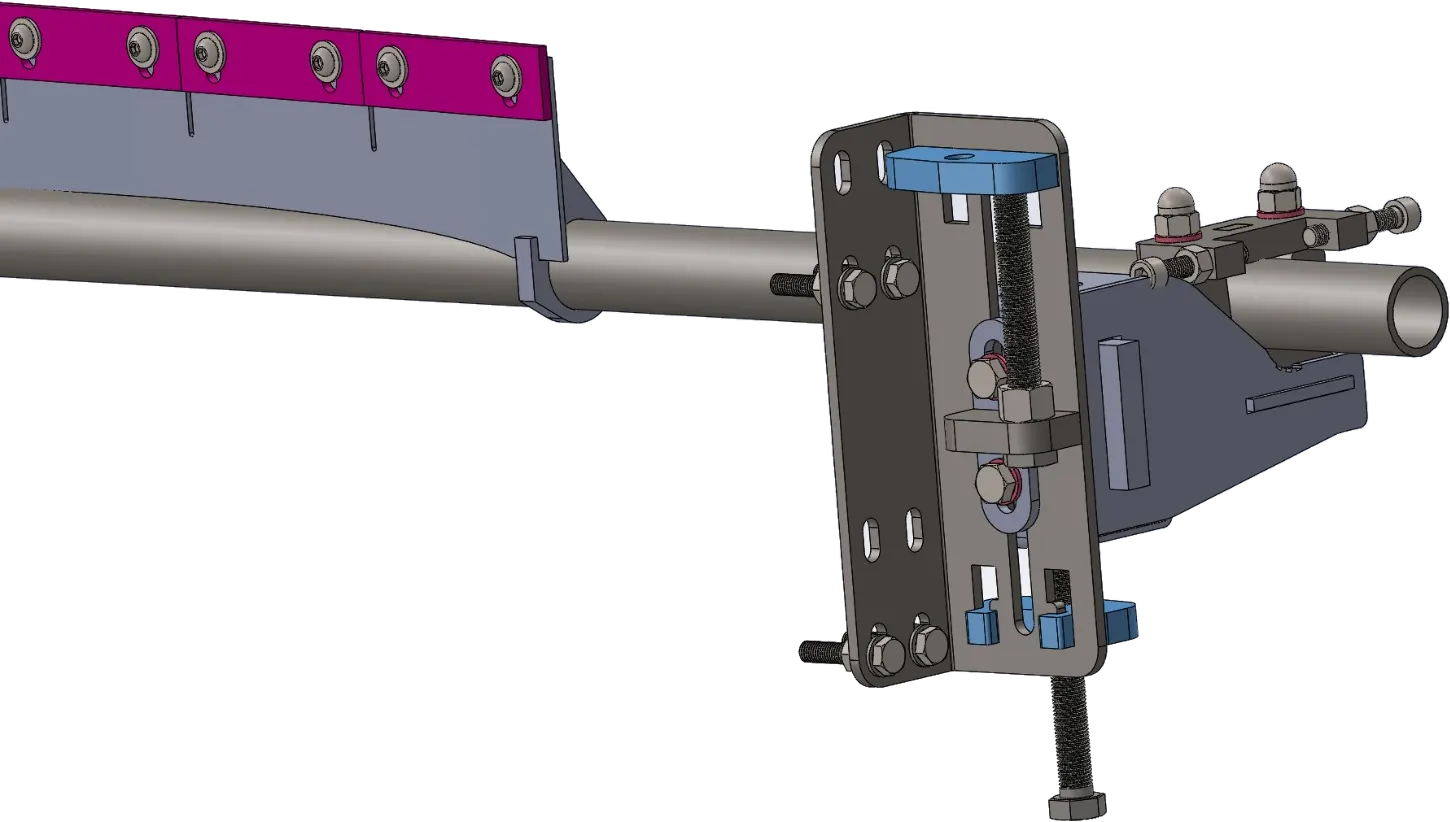
Schematic 3D view; not to scale.
Primary belt scraper
First cleaning at the head pulley
The primary scraper carries out the first cleaning at the head pulley, where the belt discharges, and removes the large pieces stuck to the belt surface.
- First cleaning at the head pulley: large pieces are removed from the belt
- Segmented body: a worn segment is replaced on its own, not the whole blade
- Less carryback: less material goes onto the return strand and into the pulleys
- Place on the line
- Head pulley
- Recommended for
- 10 industries (of 14)
- Datasheet
- Request with the short form
Overview
What is Primary belt scraper?
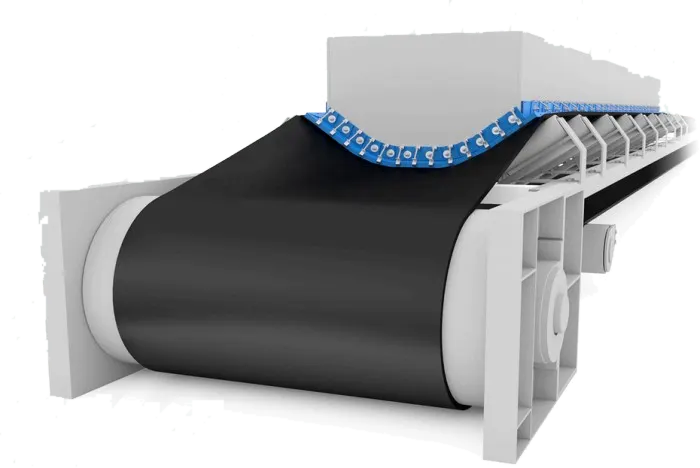
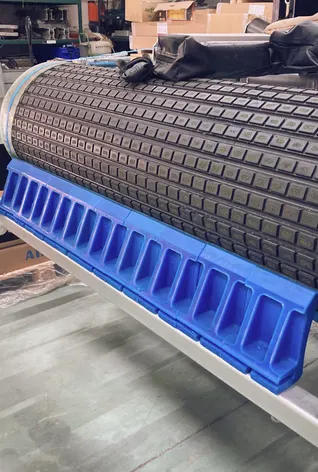
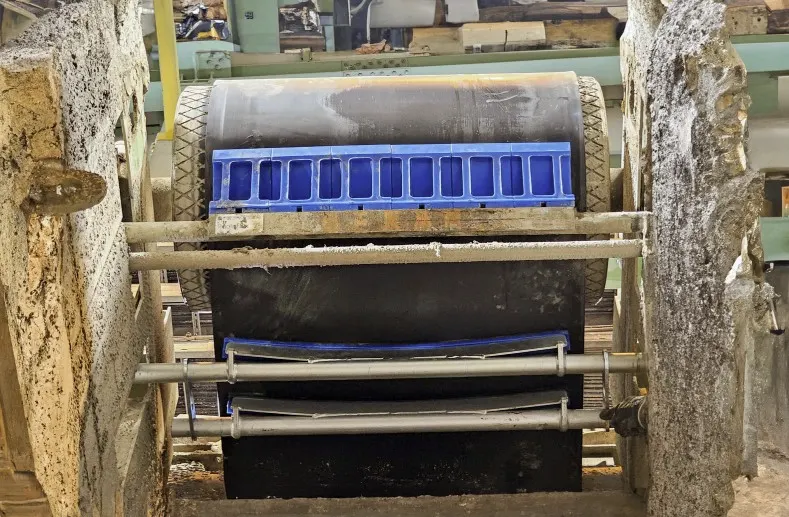
The primary scraper works at the head pulley, where the belt discharges its material, and forms the first stage of belt cleaning. Bearing on the belt at the pulley, the primary scraper removes the large pieces of material stuck to it and drops them into the discharge chute.
If material stuck to the belt is not removed, it is carried onto the return strand after the head pulley, gets into the pulleys and wears the pulley surface. Because the large pieces are removed at the first stage, mainly fine particles are left for the next stage of cleaning, the secondary scraper.
The product consists of a segmented body, a row of tips, a carrier profile and a tensioning arrangement on each side. Selection takes into account the material conveyed, the temperature, humidity and chemical conditions of the working environment, and the belt speed and width; durable scrapers are preferred for abrasive materials.
Features
Key features
First cleaning stage
The primary scraper removes large pieces at the head pulley, leaving mainly fine particles for the next stage.
Segmented body
The body is made of segments: a worn segment is replaced on its own, not the whole blade.
Row of tips
The tips that bear on the belt are set in a row, so cleaning covers the belt width.
Tensioning on each side
The tensioning arrangement on each side presses the scraper against the belt and allows the contact pressure to be adjusted.
Benefits
- Large pieces removed at the head pulley as the first stage
- Less material stuck to the belt carried onto the return strand
- Less material getting into the pulleys and less pulley surface wear
- With the segmented body, only the worn segment is replaced
- Reduced material loss and less soiling around the line
Applications
Head pulley
The primary scraper carries out the first stage of cleaning at the head pulley, where the belt discharges its material.
Reducing carryback
The primary scraper is used to reduce the material stuck to the belt that is carried onto the return strand and into the pulleys.
Recommended for
Used together with
Technical information
- Position
- Head pulley, material discharge point
- Cleaning stage
- First stage (primary)
- Construction
- Segmented body, row of tips, carrier profile, tensioning arrangement on each side
- Selection criteria
- Material type, working conditions, belt speed and width
Place on the line
Head pulley
If it is not cleaned off, material stuck to the belt is carried onto the return strand, gets into the pulleys and wears the pulley surface.
Related problems
Supporting services
Frequently asked questions
For questions specific to your line, you can contact our technical team.
What is Primary belt scraper?
What is the difference between a primary and a secondary scraper?
What is considered when choosing a scraper?
Where is the primary scraper installed?
What does the segmented body of the primary scraper provide?
Why should scrapers be checked regularly?
Where on a conveyor line is Primary belt scraper used?
Which problems does Primary belt scraper address?
Primary belt scraper is recommended for these problems:
- Sticking and carryback: Sticky material carried onto the return strand
Related articles
Related products
-
-