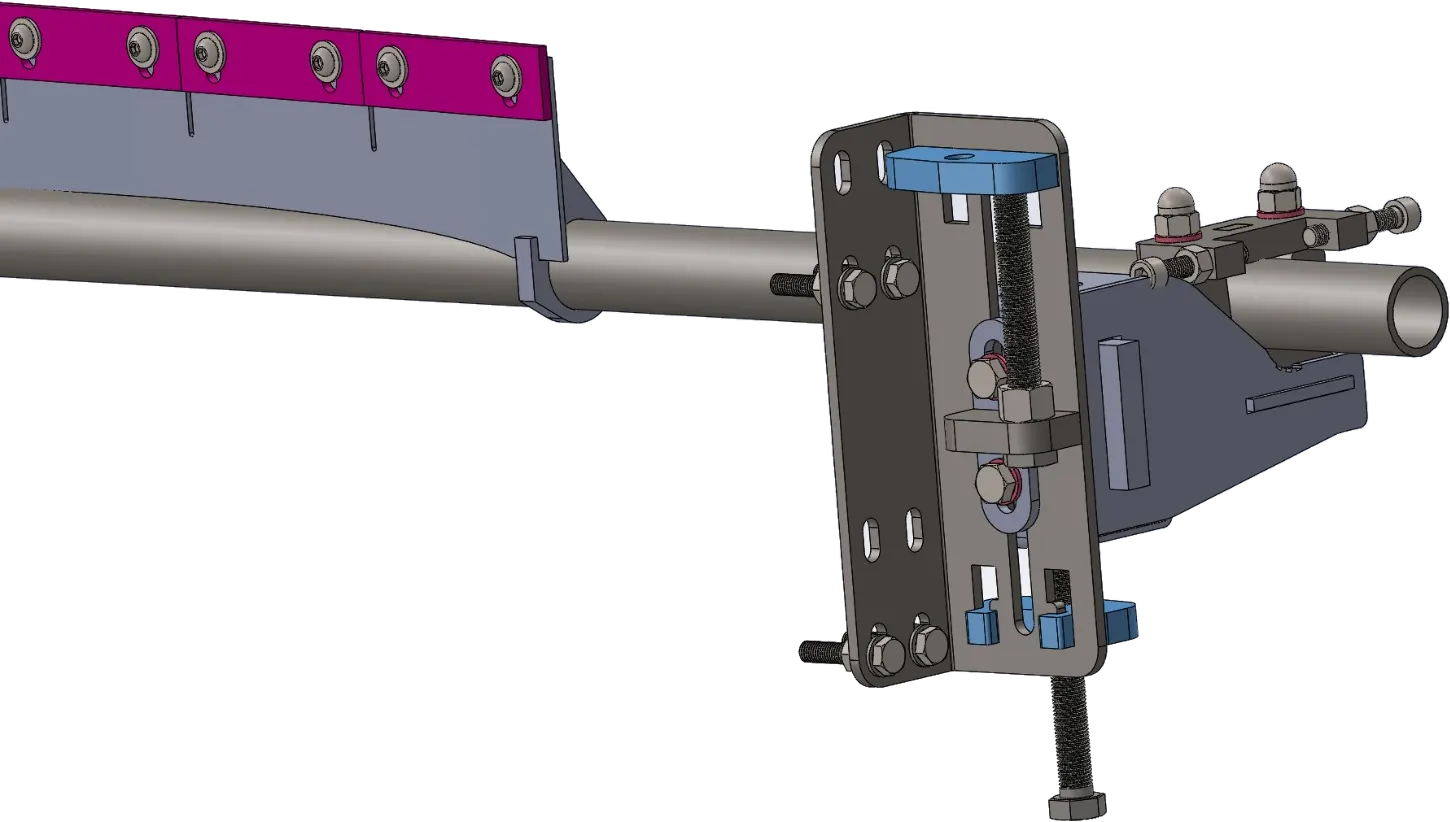
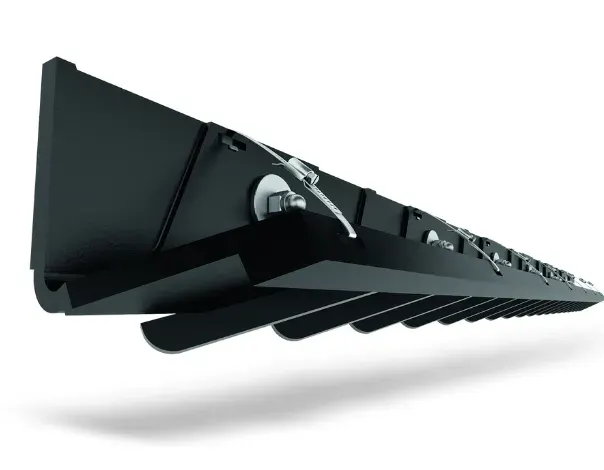
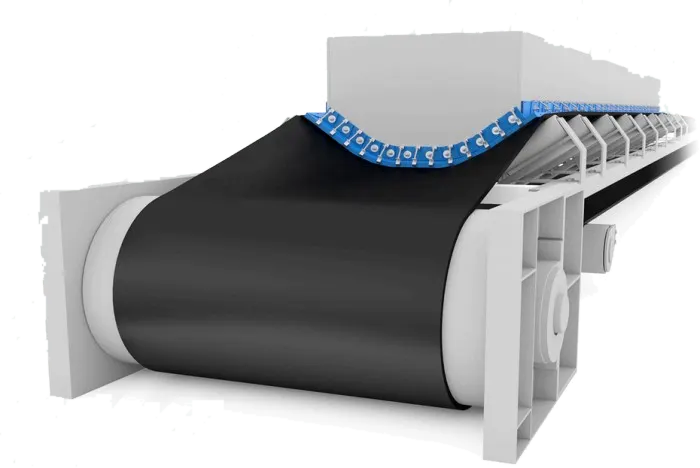

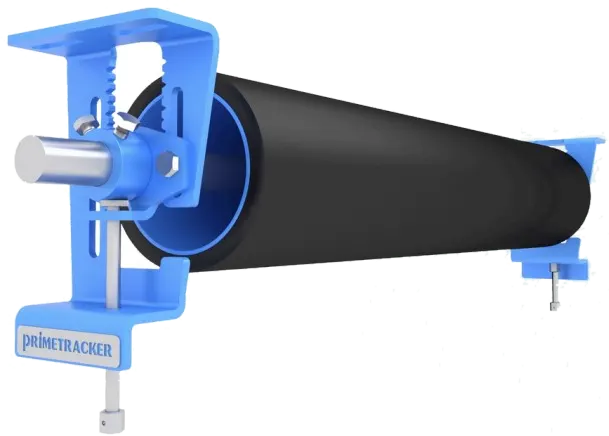
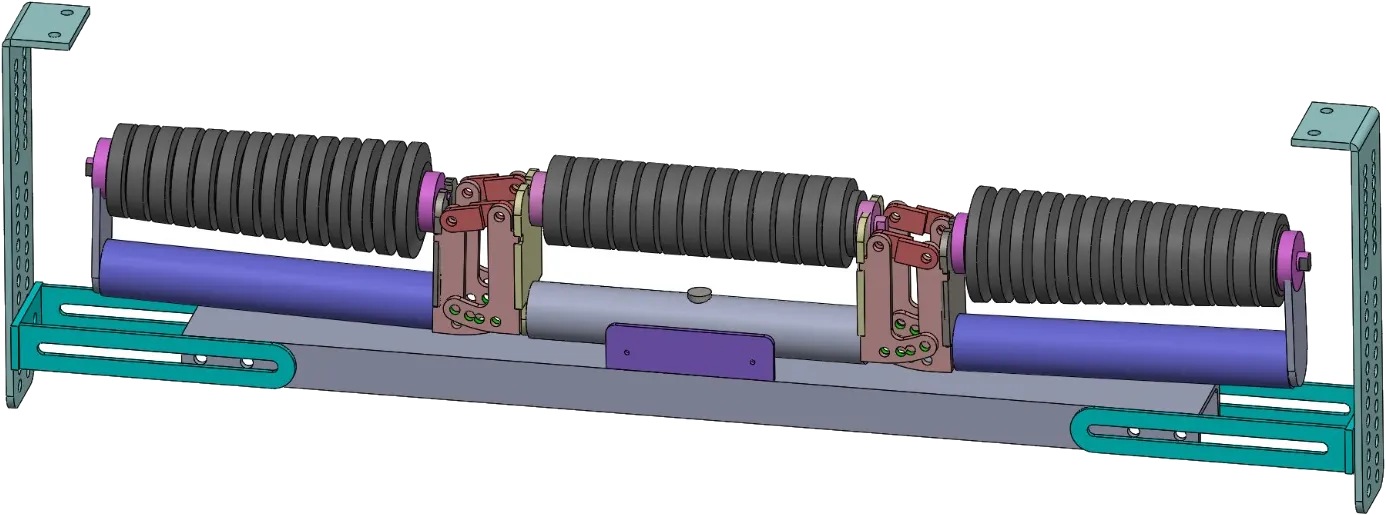
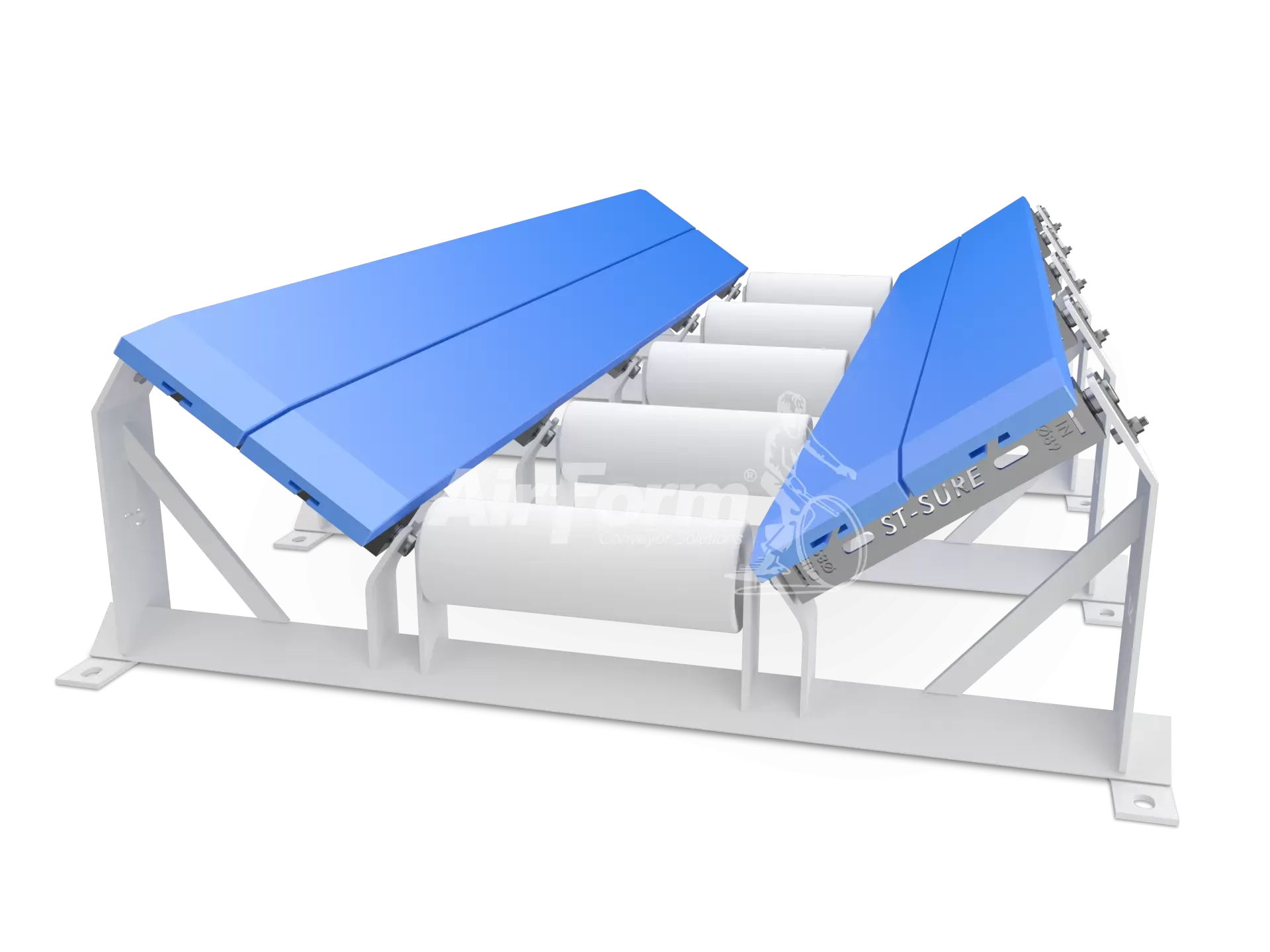

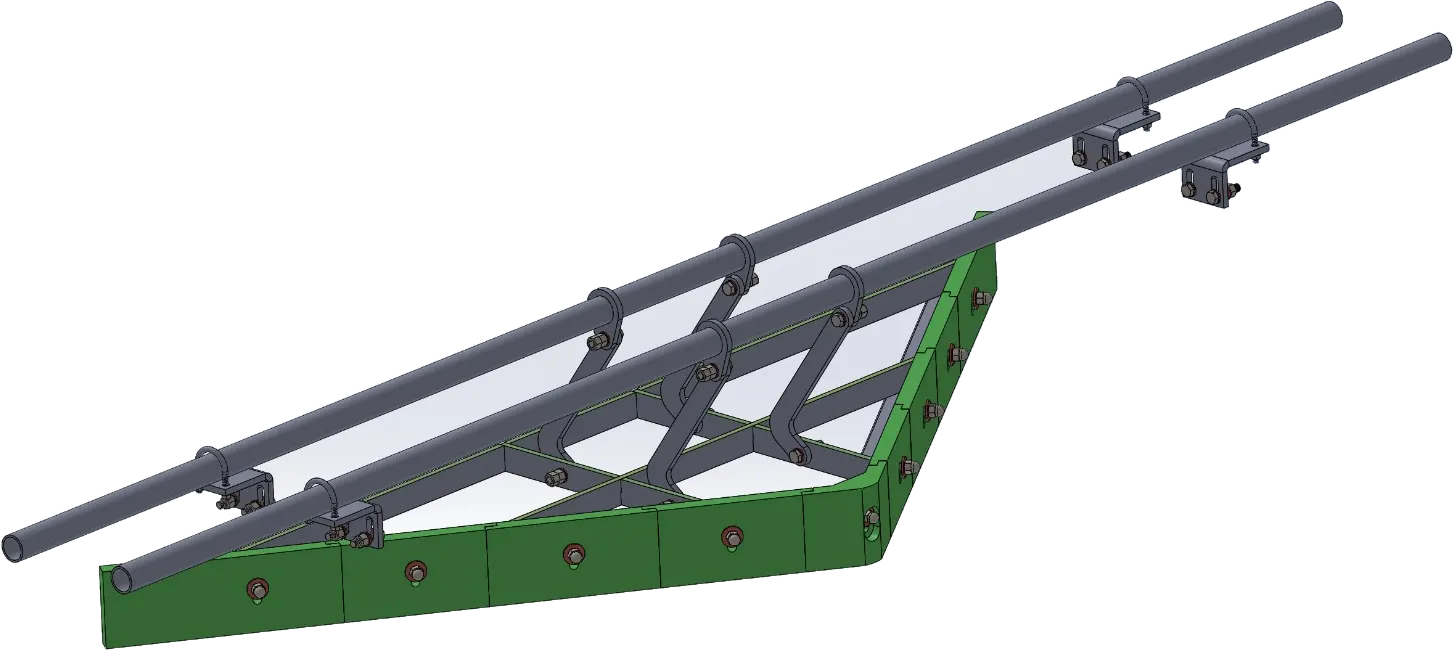
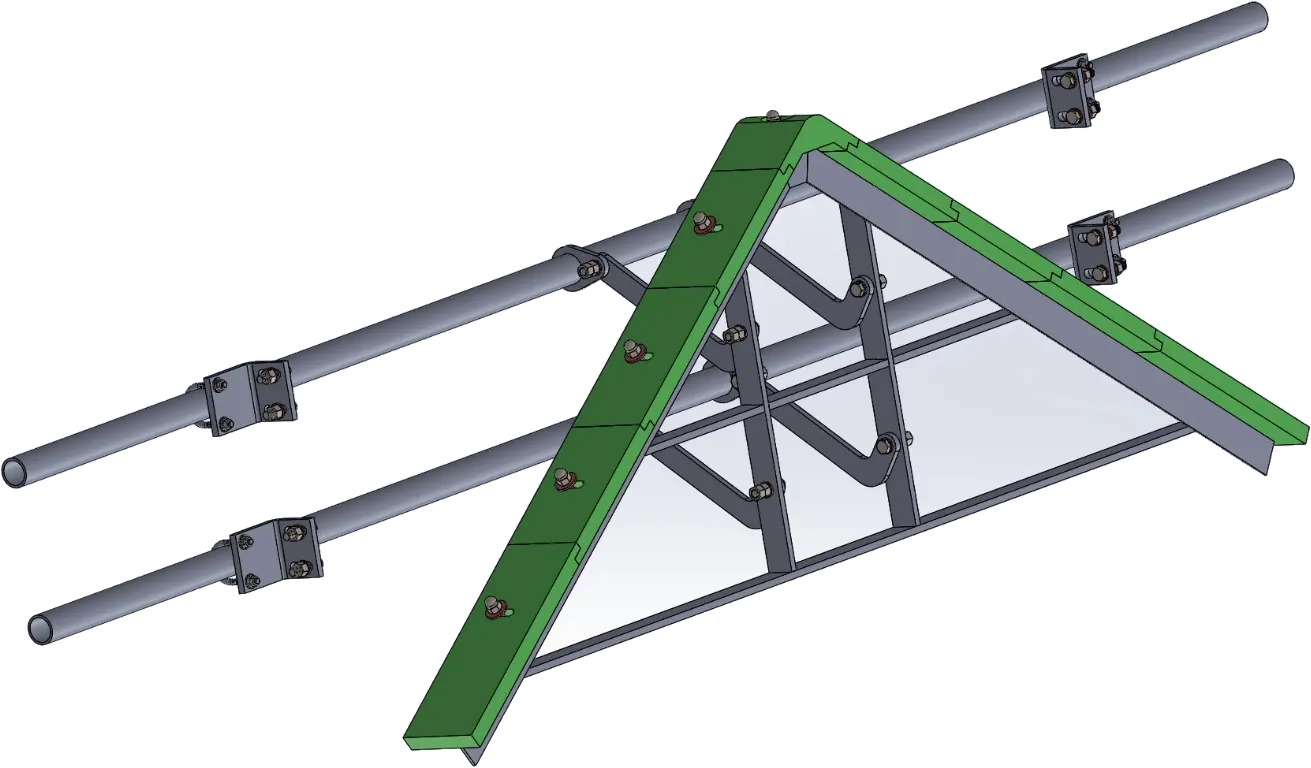
Schematic 3D view; not to scale.
V-plough scraper
Moves material aside on the return strand
The V-plough scraper directs material that falls onto the inner face of the return belt over the edge, keeping it out of the tail pulley and idlers.
- Material on the inner face of the belt is taken off over the edge
- Keeps material from getting into the tail pulley and the idlers
- Prevents material being trapped between the belt and the pulley
- Place on the line
- Return strand
- Recommended for
- 10 industries (of 14)
- Datasheet
- Request with the short form
Overview
What is V-plough scraper?
The V-plough scraper directs material that falls onto the inner face of the belt on the return strand out over the belt edge, keeping it from getting into the tail pulley and the idlers. On the return strand, the inner face of the belt runs over the pulleys and idlers; material on this face can become trapped between the belt and the pulley.
As the belt moves, the V-shaped body splits the material from the middle of the belt towards both edges and takes it off the belt. This keeps material from getting between the tail pulley and the belt, so the belt surface and the pulley are not damaged by trapped material.
The product consists of a V-shaped lamella body, the frame carrying it and two carrier pipes. Selection takes into account the material conveyed, the working conditions, and the belt speed and width.
Features
Key features
V-shaped lamella body
The V-shaped body splits material from the middle of the belt towards both edges and takes it off the belt.
Position on the return strand
The V-plough scraper works on the inner face of the belt on the return strand and removes material before it reaches the tail pulley.
Frame and carrier pipes
A frame carrying the body and two carrier pipes make up the construction.
Pulley and idler protection
Because material does not get into the tail pulley and the idlers, material is not trapped between the belt and the pulley.
Benefits
- Material on the inner face of the return belt is taken off over the edge
- Keeps material from getting into the tail pulley and the idlers
- Prevents material being trapped between the belt and the pulley
- Less belt and pulley damage from trapped material
Applications
Return strand
The V-plough scraper takes material that falls onto the inner face of the belt on the return strand off over the edge.
Ahead of the tail pulley
The V-plough scraper cleans the inner face of the belt before it reaches the tail pulley and keeps material from getting into the pulley.
Recommended for
Technical information
- Position
- Return strand, inner face of the belt
- Construction
- V-shaped lamella body, carrier frame, two carrier pipes
- Selection criteria
- Material type, working conditions, belt speed and width
Place on the line
Return strand
Mistracking (the belt running off to one side) damages the belt edges; material that falls onto the inner face of the return belt can get into the tail pulley and idlers.
Related problems
Supporting services
Frequently asked questions
For questions specific to your line, you can contact our technical team.
What is V-plough scraper?
Where is the V-plough scraper used?
What problem does the V-plough scraper prevent?
What parts make up the V-plough scraper?
How does the V-plough scraper differ from primary and secondary scrapers?
Where on a conveyor line is V-plough scraper used?
Which problems does V-plough scraper address?
V-plough scraper is recommended for these problems:
- Sticking and carryback: Sticky material carried onto the return strand
Which industries is V-plough scraper used in?
Related articles
Related products
-
-