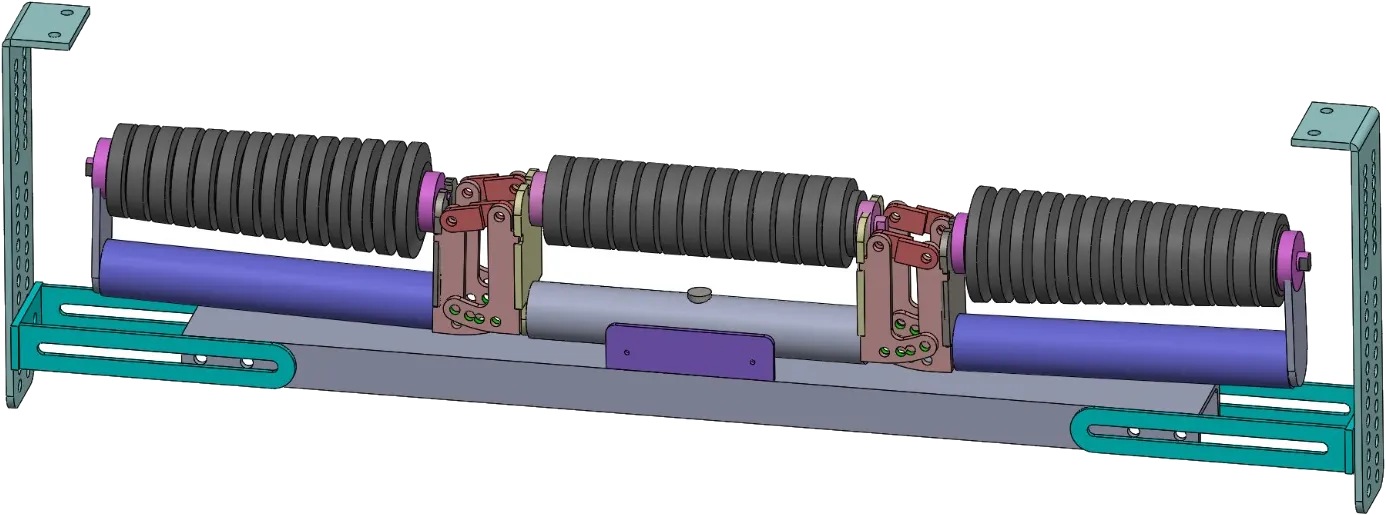
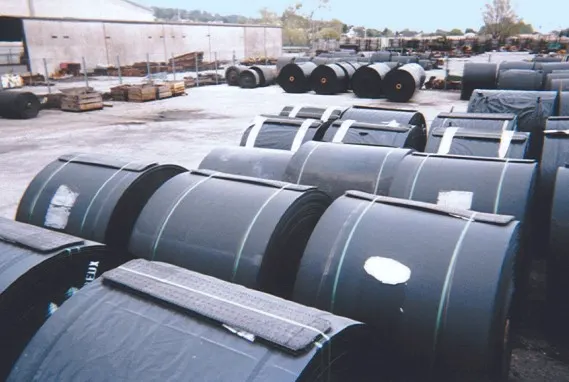
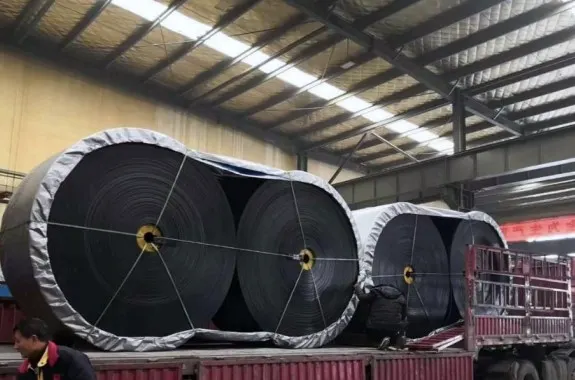
Schematic 3D view; not to scale.
Multi-ply textile conveyor belt
Available in nylon (NN) and polyester (EP)
The multi-ply textile conveyor belt comes with a nylon (NN) or polyester (EP) carcass and a cover chosen for the line, for short and medium distances.
- Nylon (NN): high flexibility and impact resistance
- Polyester (EP): low elongation, stable in hot and humid conditions
- Covers resistant to abrasion, heat, flame, oil and chemicals
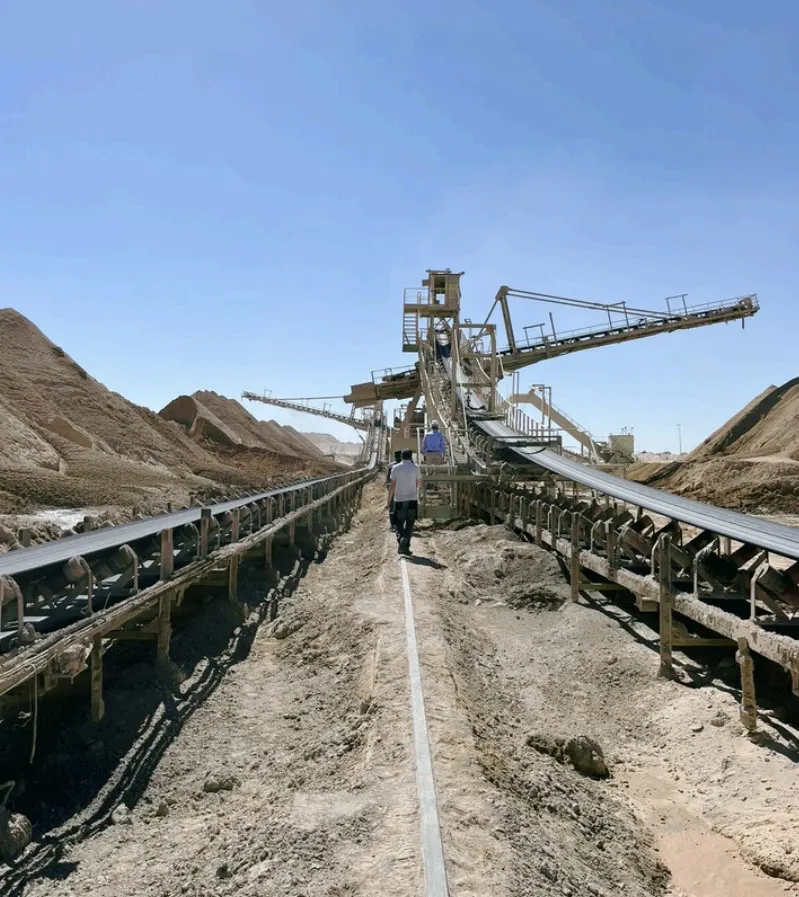
- Place on the line
- Carrying strand and belt
- Recommended for
- 14 industries (of 14)
- Datasheet
- Request with the short form
Overview
What is Multi-ply textile conveyor belt?
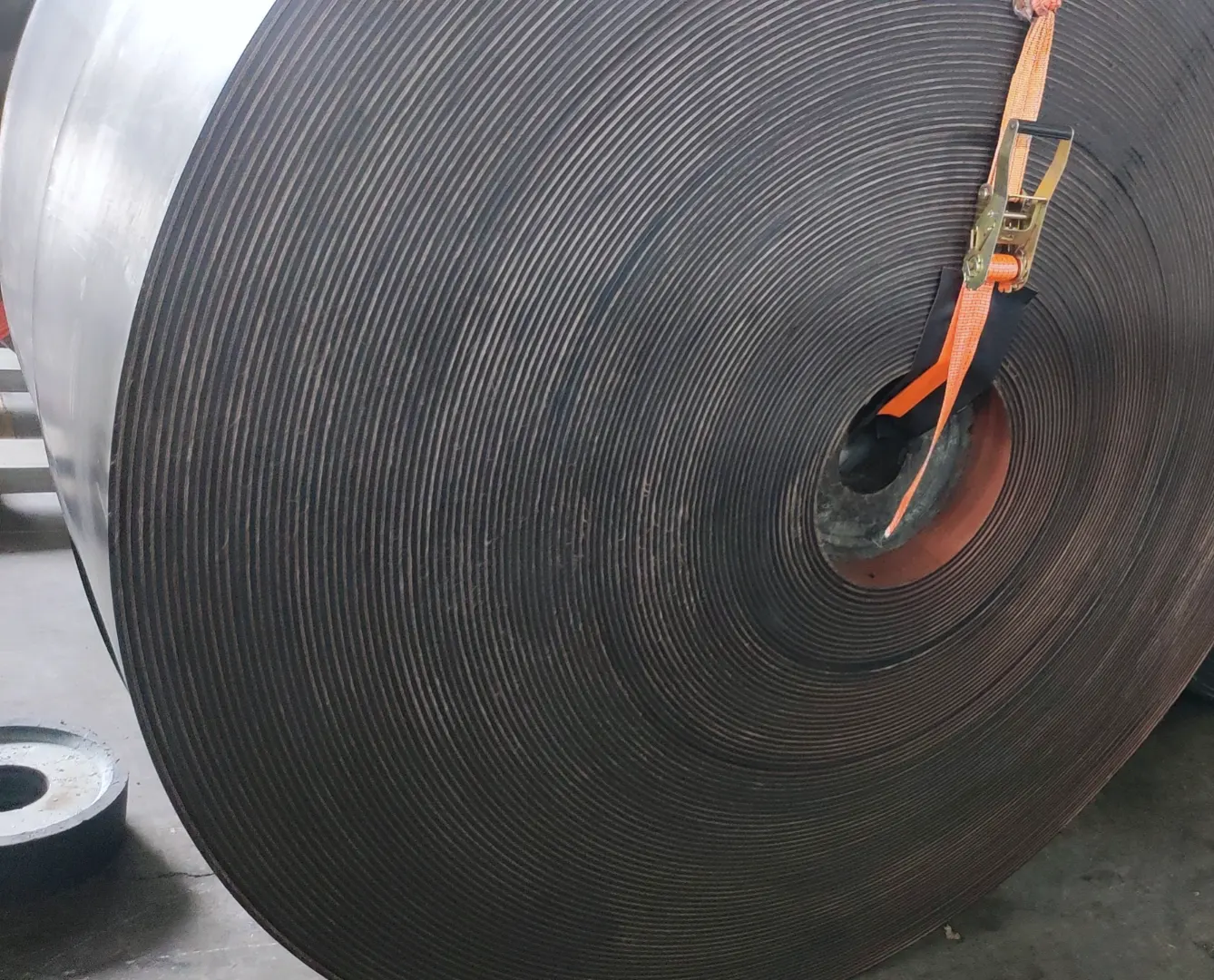
The multi-ply textile conveyor belt is built from several textile plies and stands out for its durability and flexibility. It is designed for short and medium distance material handling lines and is used across a wide range, from heavy industry to the construction sector.
On this belt, the carcass material is chosen to suit the line. A nylon (NN) carcass offers high flexibility, high impact resistance and good bending. A polyester (EP) carcass has low elongation, stays stable under temperature changes and also runs stably in hot and humid conditions.
Covers are available with resistance to abrasion, heat, flame, oil and chemicals, and the cover is chosen to suit the conditions of use. On the carrying strand the belt wears and can tear over time, so a cover suited to the conveyed material directly affects belt life.
The multi-ply textile belt is a family of belts whose carcass can be nylon (NN) or polyester (EP), intended for short and medium distances. For long-distance, humid or chemically exposed lines, the EP conveyor belt with its polyester carcass is considered.
Features
Key features
Multi-ply textile construction
The belt is built from several textile plies, which gives it durability and flexibility.
Two carcass options
A nylon (NN) or polyester (EP) carcass can be chosen; the carcass is selected for the impact and ambient conditions on the line.
Cover options
Covers resistant to abrasion, heat, flame, oil and chemicals are available; the cover is chosen for the material conveyed and the environment.
Short and medium distance
The belt is designed for short and medium distance lines; for long-distance lines, the EP conveyor belt is considered.
Benefits
- Durable, flexible construction
- Nylon (NN): high flexibility, impact resistance and good bending
- Polyester (EP): low elongation, stable in hot and humid conditions
- Cover options resistant to abrasion, heat, flame, oil and chemicals
- Suited to short and medium distance conveying
- A wide range of uses, from heavy industry to construction
Options
Nylon (NN) carcass
A nylon carcass offers high flexibility, high impact resistance and good bending.
Polyester (EP) carcass
A polyester carcass has low elongation and runs stably in hot and humid conditions.
Cover options
Covers resistant to abrasion, heat, flame, oil and chemicals are selected to suit the conditions of use.
Applications
Short and medium distance conveying
The multi-ply textile belt is designed for short and medium distance material handling lines.
Lines exposed to impact
The nylon (NN) carcass offers high resistance to impact.
Hot and humid conditions
The polyester (EP) carcass has low elongation and runs stably in these conditions.
Demanding operating conditions
Where abrasion, heat, flame, oil or chemicals are present, covers resistant to these effects are used.
Recommended for
Used together with
Technical information
- Carcass material
- Nylon (NN) or polyester (EP)
- Cover options
- Abrasion, heat, flame, oil and chemical resistant
- Conveying distance
- Short and medium distance
- Field of use
- Heavy and light industry
Place on the line
Carrying strand and belt
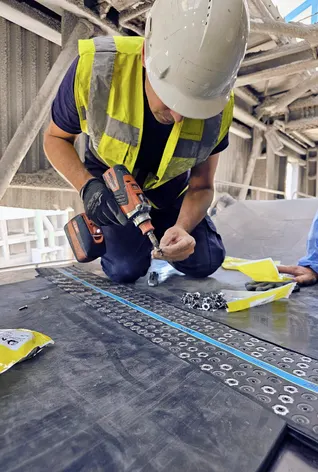
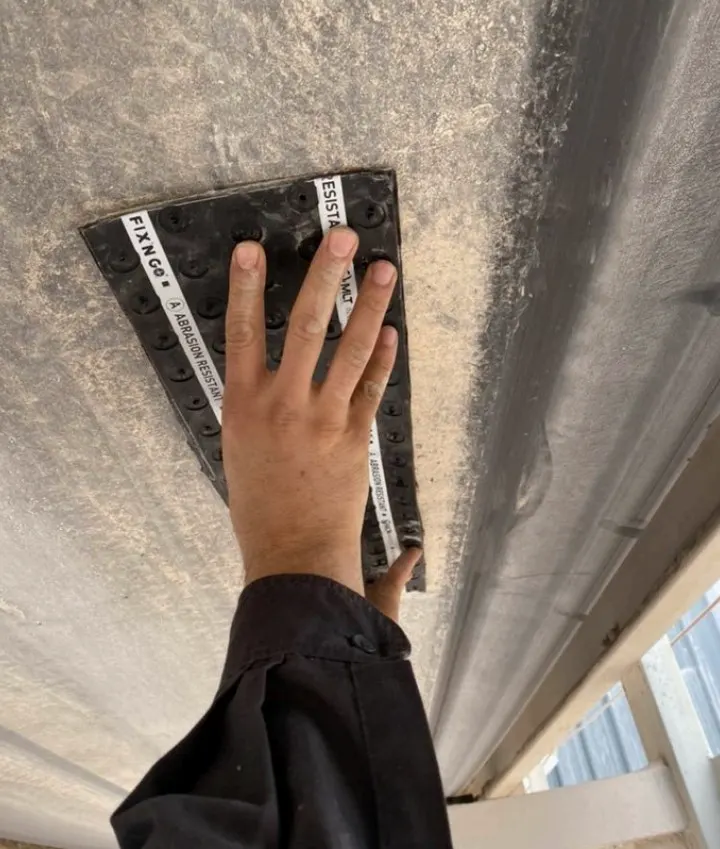
The belt wears, tears or gets punctured over time; choosing the right belt and repairing it in time shortens downtime.
Supporting services
Frequently asked questions
For questions specific to your line, you can contact our technical team.
What is Multi-ply textile conveyor belt?
What is the difference between a nylon (NN) and a polyester (EP) carcass?
How is the belt cover chosen?
Over what distances is the multi-ply textile belt used?
What is the difference between the multi-ply textile belt and the EP conveyor belt?
Where on a conveyor line is Multi-ply textile conveyor belt used?
Which industries is Multi-ply textile conveyor belt used in?
What are the benefits of Multi-ply textile conveyor belt?
- Durable, flexible construction
- Nylon (NN): high flexibility, impact resistance and good bending
- Polyester (EP): low elongation, stable in hot and humid conditions
- Cover options resistant to abrasion, heat, flame, oil and chemicals
- Suited to short and medium distance conveying
- A wide range of uses, from heavy industry to construction
Related articles
Related products
-
-
-